
How to Create a Simple Weekly Meal Plan for Stress-Free Cooking
Creating a weekly meal plan can transform the way you approach cooking and eating. It helps save time, reduces last-minute stress, improves your diet, and can even help with budgeting. If you’ve never made a meal plan before or want to keep it simple, this guide breaks it down into easy steps that anyone can follow.
Why Create a Weekly Meal Plan?
Before diving into the steps, let’s quickly look at why planning meals each week is a good idea:
– Saves Time: Knowing what to cook ahead of time eliminates daily decision-making.
– Reduces Stress: You avoid the “What’s for dinner?” dilemma.
– Improves Nutrition: Planning helps you include balanced meals with vegetables, proteins, and grains.
– Cuts Food Waste: You buy only what you need, so less goes to waste.
– Saves Money: Shopping with a list prevents impulse buys.
Step 1: Assess Your Week Ahead
Begin by looking at your schedule for the coming week. Note down:
– How many meals you need to plan for (breakfast, lunch, dinner, snacks)
– Days when you’ll eat out or have special plans
– Days when you have time to cook versus busy days
– Any dietary needs or preferences
Knowing this helps create a realistic plan.
Step 2: Choose Your Recipes
Pick simple recipes that suit your time and skill level. Here are some tips:
– Select 3–4 dinners for the week and consider leftovers.
– Include meals that can share ingredients to reduce waste.
– Use easy recipes with few ingredients if you’re short on time.
– Consider versatile staples like pasta, rice, roasted vegetables, or salads.
Sample Dinner Ideas
– Spaghetti with tomato sauce and a side salad
– Stir-fried veggies with chicken and rice
– Baked salmon with roasted sweet potatoes
– Veggie omelet with whole-grain toast
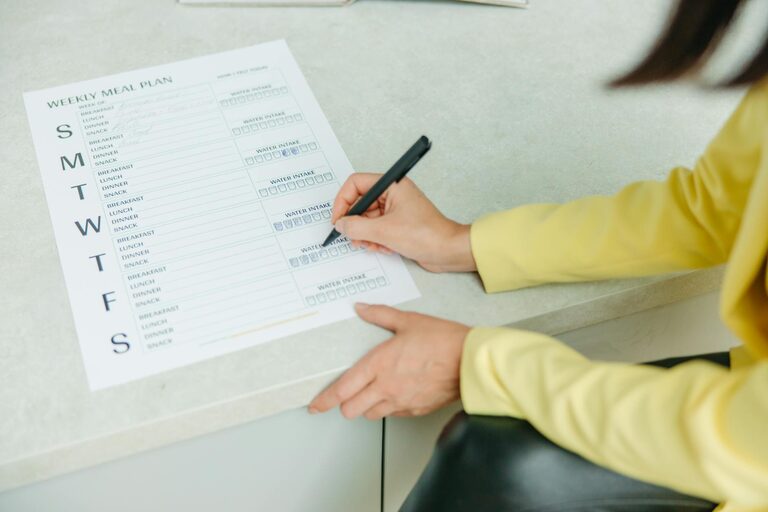
Step 3: Plan Your Meals on Paper or App
Write down or use an app to map out your meals for each day. Start with dinners since they often require the most planning. Then fill in lunches, breakfasts, and snacks.
Sample layout:
| Day | Breakfast | Lunch | Dinner |
|———–|——————-|———————-|————————|
| Monday | Oatmeal and fruit | Leftover salmon salad| Stir-fry chicken & rice|
| Tuesday | Yogurt and granola| Veggie wrap | Spaghetti with sauce |
| Wednesday | Smoothie | Soup and sandwich | Baked salmon |
Step 4: Make Your Shopping List
Based on your meal plan, list out all ingredients you’ll need. Organize the list by grocery store sections to make shopping faster (produce, dairy, meat, pantry).
Tips for efficient shopping:
– Check your pantry and fridge before making the list to avoid duplicates.
– Prioritize fresh items and plan to buy perishables closer to the cooking day.
– Include staple items for quick snacks like nuts, fruits, or cheese.
Step 5: Prep Ingredients Ahead of Time
If possible, spend some time after shopping to prepare ingredients in advance:
– Wash, chop, and store vegetables in containers.
– Marinate meats or prepare sauces.
– Cook grains or beans that can be refrigerated and used throughout the week.
Doing this cuts down cooking time during busy weekdays.
Step 6: Stay Flexible
While having a plan is helpful, it’s important to remain flexible. You might want to swap meals or adjust portions based on your appetite or schedule changes. The goal is to reduce stress, not add to it.
Bonus Tips for Successful Meal Planning
– Batch Cook: Prepare double portions to have leftovers for lunch or dinner.
– Use Theme Nights: Assign themes like “Meatless Monday” or “Taco Tuesday” to simplify choices.
– Include Variety: Rotate meals weekly to prevent boredom.
– Keep Snacks Healthy: Plan simple snacks like cut veggies, fruit, or yogurt.
Conclusion
Creating a simple weekly meal plan doesn’t need to be complicated. Start small by planning just dinners, then gradually include other meals if you want. By organizing your meals ahead of time, you’ll enjoy less stress, healthier eating, and more time to relax.
Give it a try next week and see the difference it makes!
